
Canada’s Digital Transformation of Benefit-Delivery Systems — What Changes for OAS, EI & Seniors

In 2026, the traditional image of a Canadian senior waiting by the mailbox for a paper cheque is becoming a relic of the past.
For many citizens, the transition to updated systems has introduced both efficiency and new procedural hurdles.
When federal payments do not arrive as expected, the shift toward digital-only support channels can create significant friction for those accustomed to traditional service models.
The federal government is currently undergoing a massive digital transformation of benefit-delivery systems, replacing the legacy infrastructure of previous decades.
This transition aims to modernize how public funds are distributed.
For seniors and individuals accessing Employment Insurance (EI), this change is intended to streamline the user experience, although the practical application often requires a new set of digital skills.
The 2026 Benefit Shift
- The BDM Update: How “Benefits Delivery Modernization” (BDM) affects your monthly payments.
- OAS & CPP Updates: Understanding automatic enrollment features and verification steps.
- EI Evolution: The transition to real-time processing and integrated reporting.
- Cybersecurity: Protecting your My Service Canada Account (MSCA) from emerging fraud tactics.
- Resolution Steps: What to do if a digital payment is delayed or missing.
The Rationale for Modernizing Benefit Delivery
The primary objective of this modernization is to stabilize a system that had become reliant on aging technology.
For years, Canada’s social safety net utilized mainframe computers that struggled to keep pace with modern demands.
The current digital transformation of benefit-delivery systems is designed to centralize services into a secure, cloud-based hub.
This centralization allows for more predictable delivery of benefits like Old Age Security (OAS) and EI.
The “back-end” reconstruction ensures that updating personal information in one portal can synchronize across the CRA, Service Canada, and Elections Canada simultaneously.
While this reduces administrative redundancy, it also places a higher emphasis on the security of a single digital login.
The Implications of Centralized Access
Centralization means that your My Service Canada Account (MSCA) serves as a comprehensive gateway to federal financial support.
In 2026, this login is a critical component of a citizen’s financial identity.
It is recommended that users treat these credentials with the same level of security as online banking information to prevent unauthorized access to their entire federal profile.
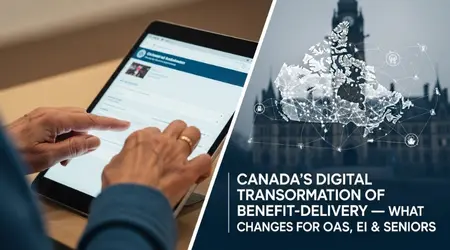
Impact on Old Age Security (OAS) and Seniors
A significant feature of the digital transformation of benefit-delivery systems is “Proactive Enrollment.”
This process reduces the need for lengthy paper applications for those reaching age 65. Instead, the system utilizes existing tax data to initiate payments automatically.
However, proactive enrollment relies on accurate and complete digital records. Individuals with gaps in their residency or those who have lived abroad may find that the automated system requires additional manual verification.
As the government shifts resources toward digital support, accessing human intervention for complex files has become a more structured process.
Also read: Spotlight on Indigenous Rights: New Developments Addressing Education, Health & Self-Governance
Verifying Enrollment Status
It is advisable for citizens to access their MSCA approximately six months before their 65th birthday. Users should verify their “OAS Status” within the portal.
If the status does not indicate “Enrolled,” proactive steps should be taken to provide any missing information.
In a digital-first environment, monitoring your account is a necessary part of ensuring benefit continuity.
Read more: How Canada Plans to Meet the North Atlantic Treaty Organization 5%-of-GDP Defence Target
Updates to Employment Insurance (EI) Processing
Employment Insurance has historically involved a rigorous bi-weekly reporting process.
As part of the digital transformation of benefit-delivery systems, Service Canada is implementing “Real-Time Earnings Reporting.”
This allows the system to link directly to payroll software used by many employers, particularly in the traditional and gig economies.
This integration can significantly reduce the time between a layoff and the first payment. While the mandatory waiting period remains, the administrative processing lag is decreased.
It is important to note that because the system is automated, errors in employer data feeds can result in automatic overpayment flags.
Users are encouraged to maintain personal records of hours worked to cross-reference against the digital dashboard.
Using the New EI Dashboard
The 2026 dashboard provides visual tools, such as progress bars, to show remaining entitlement weeks. This transparency assists with financial planning, though users should remain vigilant.
Automated systems can experience technical glitches, making personal documentation a vital backup for any claim disputes.
Case Study: Navigating Digital Barriers in Rural Communities
Consider the experience of residents in rural areas where physical Service Canada offices may have closed.
For individuals in these regions, the digital transformation of benefit-delivery systems places a high demand on local internet infrastructure.
If technical issues prevent a successful application, the “Service Canada Video Chat” feature has been introduced as a 2026 alternative to in-person meetings.
This requires a stable connection but offers a way to bypass traditional phone queues.
These digital hurdles illustrate the “hidden costs” of modernization for those without reliable high-speed access, making community resources like local libraries essential hubs for digital navigation.
Pros and Cons of the 2026 Digital Benefit System
| Feature | Legacy System | 2026 Digital System | Potential Impact |
| Enrollment | Manual, paper-based applications. | Proactive, data-driven enrollment. | Faster access; reduced risk of missing the start date. |
| Reporting | Manual bi-weekly web or phone reports. | Real-time payroll data integration. | Higher accuracy; faster processing of EI payments. |
| Support | In-person visits and phone queues. | AI assistance and Video Triage. | Efficient for many, but challenging for some. |
| Security | Risk of mail theft for paper cheques. | Encrypted deposits and e-transfers. | Lower physical theft risk; higher cyber risk. |
| Speed | 28-day standard for EI processing. | 5-to-7-day target for EI processing. | Improved cash flow during periods of unemployment. |
Digital Vulnerabilities and Senior Support
The “digital-first” policy can be a challenge for those with limited technology experience. The digital transformation of benefit-delivery systems assumes a level of digital literacy that varies across the population.
Some individuals may feel pressured to seek third-party assistance, which can lead to privacy risks.
Community hubs, such as public libraries, have increasingly partnered with Service Canada to offer clinics. These resources provide a safer alternative to unverified “consultants.”
For those assisting seniors, ensuring that the transition to digital does not result in a loss of access to benefits is a high priority.
Protection Against Digital Identity Theft
Fraud attempts have become more sophisticated in 2026. Scammers may use AI to impersonate government agents, claiming a need to verify information due to the digital transformation of benefit-delivery systems.
It is a standard rule that Service Canada will not request a Social Insurance Number (SIN) in an unsolicited call.
All official communications regarding account updates are delivered through the secure “Messages” center within the MSCA portal.
Common Questions Regarding the New System
Is Personal Data Secure in the Cloud?
The government utilizes high-level encryption protocols. However, the security of an account often depends on the user’s password strength and the use of Multi-Factor Authentication (MFA).
Implementing MFA, such as SMS codes or authenticator apps, is a critical requirement for protecting benefits in 2026.
Support for Those Without Digital Access
The federal government is required to maintain non-digital pathways for service. While the “Service Canada Telephone Service” remains available, it often experiences longer wait times as resources are prioritized for digital channels.
Users who cannot navigate a computer may appoint a “Trusted Representative” to manage their portal on their behalf.
The Role of AI in Benefit Decisions
While the digital transformation of benefit-delivery systems uses algorithms to identify inconsistencies, legal requirements ensure that human agents make the final determination on benefit denials.
If a “Notice of Debt” or denial is issued, citizens maintain the right to request a “Reconsideration” within 30 days.
Future-Proofing Your Benefit Delivery
The digital transformation of benefit-delivery systems is a permanent shift in Canadian public policy.
To ensure continued access, citizens should conduct periodic “Digital Audits” of their accounts. This includes verifying that direct deposit details and contact information are current.
This shift toward efficiency is intended to improve the delivery of social support. However, maintaining accountability is essential to ensure that as systems become more automated, they remain accessible to all Canadians.
Embracing these digital tools can result in faster support, provided users remain informed and vigilant about account security.
The digital transformation of benefit-delivery systems remains the most significant update to Canada’s social infrastructure in decades.
Frequently Asked Questions
Can I still receive paper cheques?
While paper cheques are being phased out, waivers may be granted for individuals in remote areas without banking access or those with specific medical conditions.
Generally, direct deposit is the mandatory standard in 2026.
What is “BDM” on my correspondence?
BDM stands for “Benefits Delivery Modernization.” This refers to the digital transformation of benefit-delivery systems. Seeing this indicates that your file is part of the new cloud-integrated infrastructure.
Does this system change the amount of my benefits?
The modernization affects the method of delivery, not the calculation of benefits. However, improved data cross-referencing may lead to faster identification of overpayments if income is not correctly declared.
How does real-time reporting affect gig workers?
Many major platforms are now integrated with Service Canada, meaning earnings are reported automatically for EI purposes. If a platform is not integrated, manual reporting through the portal is still required.
What should I do if my account is “Flagged”?
A flag usually indicates a data discrepancy. Most issues can be resolved by uploading digital copies of required documents, such as a T4 or Record of Employment (ROE), directly through the MSCA portal.