
How international student arrivals drop reshapes Canada

Walking down the main street of a mid-sized Ontario town on a crisp Wednesday morning, the atmosphere is noticeably different from just a few years ago.
Previously, the area was characterized by high foot traffic, diverse linguistic groups, students heading to lectures, and a fast-paced rental market where units were snapped up almost immediately.
Today, the street is quieter. Coffee shops often have available seating, and “For Rent” signs remain in windows for extended periods.
This shift reflects changes in national demographic and economic trends.
The international student arrivals drop reshapes the fabric of many communities, influencing everything from university tuition revenue to the competitive dynamics of the local retail sector.
- The impact on the cost of living and housing availability.
- How local services might change as university budgets tighten.
- The cooling effect on the labor market for entry-level positions.
- The implications for the long-term sustainability of immigration-fueled growth.
Why Is This Shift Happening Now?
For years, Canada’s post-secondary sector functioned as both an academic institution and a significant economic driver.
The system relied on tuition fees from abroad to supplement public funding for colleges and universities.
However, challenges emerged as housing supply struggled to keep pace with population growth, and public discourse regarding immigration levels shifted.
The federal government’s implementation of a cap on study permits represented a significant policy change.
The international student arrivals drop reshapes the way municipalities approach infrastructure planning.
For a decade, cities including Brampton, Halifax, and Waterloo based growth projections on a consistent increase in new arrivals.
These municipalities are now adjusting to a period of stabilization.
How Does This Affect Your Wallet?
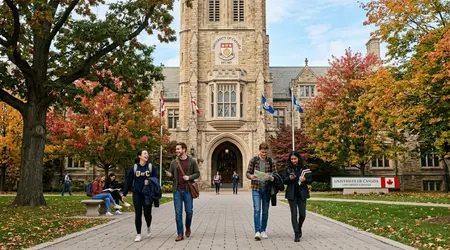
The reduction in the number of international students has practical implications for various segments of the economy.
Regarding the rental market, cities with high concentrations of students previously saw intense competition for basement apartments, which contributed to rising market rents.
With fewer students entering the country, demand is shifting. Renters may find increased options, while landlords are adjusting to a market where occupancy is no longer guaranteed.
Local businesses are also experiencing changes. Many quick-service restaurants, transit systems, and seasonal retail shops depended on a consistent stream of students for both patronage and labor.
A reduction in this demographic can affect revenue models and service levels. Residents might notice adjustments, such as altered operating hours or changes in public transit frequency in specific corridors. These are typical trade-offs occurring as the market recalibrates.
++ How Ontario college layoffs 2026 reshape higher education
A Look at a Local Family
The experience of a family in a suburb of London, Ontario, illustrates these local impacts.
A year ago, young workers competed against a large pool of applicants for minimum-wage roles, from fast-food service to warehouse positions. This labor supply often resulted in flat wages and limited hours.
As the international student arrivals drop reshapes the local labor pool, employers are beginning to offer different incentives, including more predictable scheduling, to attract and retain staff.
While this may benefit some job seekers, it also presents challenges for local educational institutions.
If colleges face reduced revenue, they may need to re-evaluate local programming or adjust fees for domestic students to cover operational costs.
These factors are currently part of broader discussions regarding local economic health.
Comparing the New Landscape
The following table outlines how this cooling period is influencing different sectors.
| Sector | Previous Trend (The “Boom”) | Current Shift (The “Reset”) |
| Rental Market | Extreme demand; rising prices | Stabilization; better leverage for tenants |
| University Budget | Heavy reliance on international fees | Budget deficits; pressure on domestic tuition |
| Retail Labor | Abundant, cheap labor supply | Tighter competition for employees |
| Public Infrastructure | Strained; constant expansion needs | Opportunity to catch up on maintenance |
What Many Miss About Policy Impacts
Public discussion often overlooks the “middle-class squeeze.” Previous efforts focused heavily on the volume of new arrivals, sometimes at the expense of scaling the systems required to support them.
As the international student arrivals drop reshapes the intake process, policymakers are attempting to reach a balance limiting arrivals to ensure infrastructure capacity while maintaining demographic stability.
However, policy can have unintended consequences. Restricting arrivals effectively cools the economy in specific geographic pockets.
Cities dependent on major universities may experience periods of stagnation, and municipal governments may face difficult decisions regarding property taxes or service delivery.
Residents should monitor municipal budget documents, as cities that relied heavily on “growth-based” revenue may face fiscal challenges.
Are We Heading for a Service Gap?
A common concern is whether a reduction in arrivals will lead to a permanent gap in service roles.
The economy had integrated a large transient labor force, and as this availability changes, businesses are re-evaluating their operational models.
Some may implement further automation, such as increased use of digital kiosks, while others may struggle to maintain their current staffing levels.
This period of transition may be uncomfortable. Residents might experience changes, such as reduced operating hours at local businesses or longer wait times in service environments.
These are potential outcomes of recalibrating immigration levels to align with current capacity to house and serve the population.
The Path Toward Sustainable Growth
Navigating these economic shifts requires careful observation of both national policy and local conditions.
As macro trends filter down to the neighborhood level, residents can make more informed decisions regarding their personal budgets, housing, and community involvement.
While the current cooling phase presents challenges, it also serves as a period for necessary structural adjustment, allowing the economy to recalibrate and align with the infrastructure and service capabilities available to all Canadians.
Staying informed about local municipal budget decisions and provincial policy changes is the most effective way to understand how these broader shifts will affect individual circumstances in the coming years.
Frequently Asked Questions
Will my rent actually go down because of this?
While a significant market correction is not guaranteed, there is potential for a cooling in the rate of rent increases.
In markets formerly dominated by student rentals, tenants may have more negotiating power than in previous years.
Does this mean my tuition fees will rise?
It is a possibility. Universities have historically used international tuition to cross-subsidize operations.
As institutional budgets adjust to lower international enrollment, these shortfalls may impact overall funding models.
It is advisable to monitor provincial policy announcements regarding post-secondary funding.
Is the government going to change these rules again soon?
Canadian immigration policy is subject to review based on economic indicators.
If the labor market faces significant shortages or if the business sector reports critical gaps, policies may be adjusted.
It is helpful to view these rules as dynamic rather than fixed.
How does this affect the housing market long-term?
Slowing the population intake provides a window for municipal and provincial planners to address housing supply.
While the success of this period depends on planning initiatives, the demand curve is becoming more manageable.